
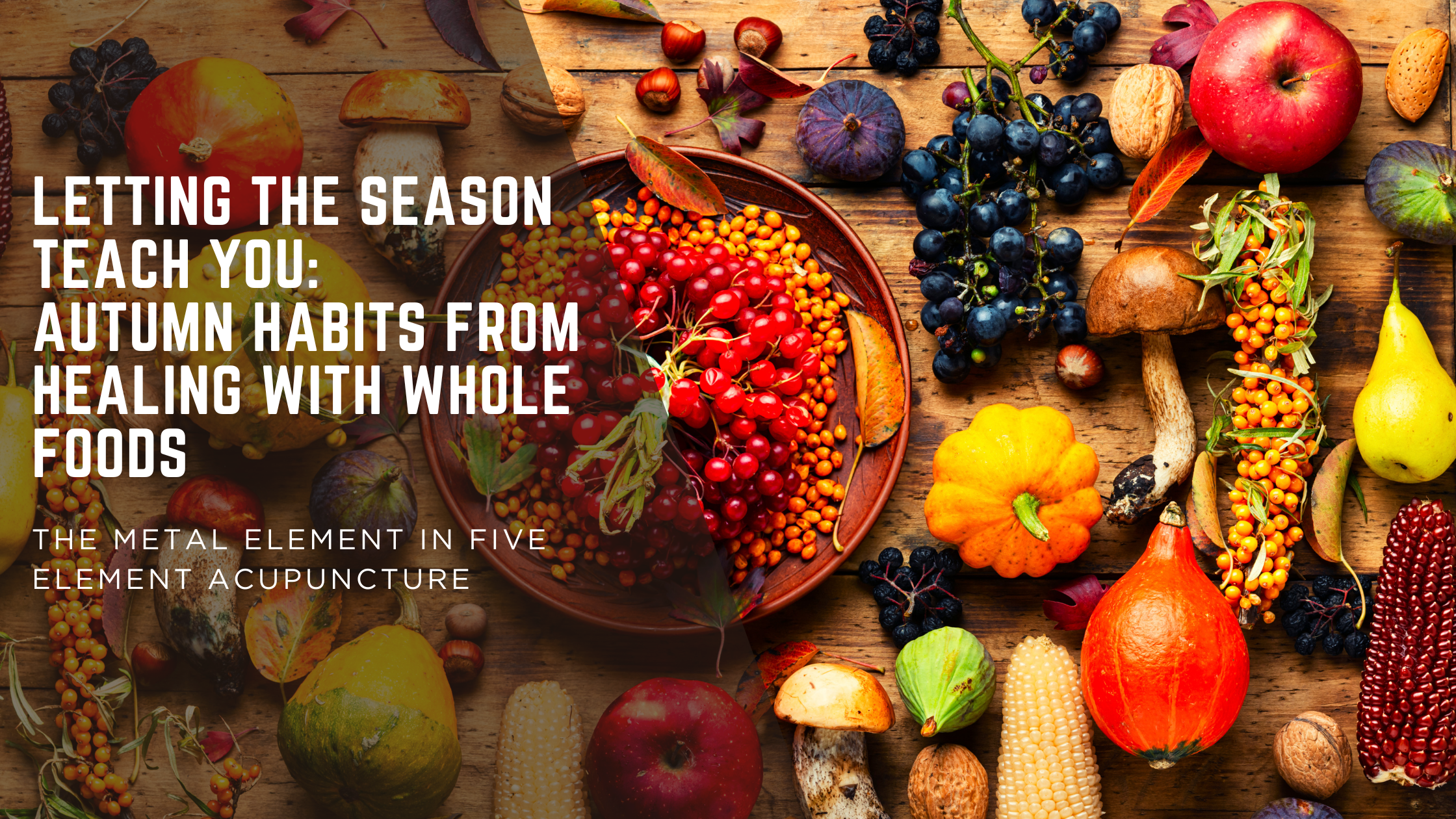
Paul Pitchford’s Healing with Whole Foods book describes autumn as the body’s harvest season — nature pulling everything inward and downward, concentrating its energy before winter’s stillness arrives. Leaves drop, sap retreats into roots, and the landscape conserves rather than expands. Pitchford treats this as more than scenery — it’s a template for how we might eat and live through the season too.
Cook Like the Season Is Contracting
Pitchford’s core instruction for autumn eating is simple: cook longer, use less water, lower heat. This mirrors what the season itself is doing — concentrating rather than dispersing. It’s a shift away from light, quick summer cooking toward something heartier and more grounding.
Sour flavors get particular attention — foods like sauerkraut, pickles, yogurt, and lemons help gather the scattered, outward energy left over from warmer months and refocus it inward.
Protect Against Dryness
Autumn’s climate, in this framework, is dry — and dryness shows up as thirst, dry skin, a dry throat, or itchiness. Pitchford’s fix is to counter it proactively with moistening foods: soy products, barley, pears, apples, almonds, sesame seeds, and seaweed all feature on his list. A little salt in cooking helps too. One caution — those already prone to dryness should go easy on warming spices, which can intensify it.
Support the Lungs Through Flavor and Color
The lungs are the organ most closely tied to this season. Pitchford connects their strength to pungent, white-colored foods — onion, garlic, ginger, daikon — for clearing stagnation, and to mucilaginous foods like seaweed and flaxseed for renewing the mucous membranes. Beta-carotene-rich vegetables — carrots, squash, kale — round out the protective picture, along with adequate dietary fiber, which he notes is linked to lower risk of the cancers that affect the colon and lungs specifically.
The Breath-Grief Connection
The most striking part of Pitchford’s lung chapter isn’t dietary — it’s emotional. He describes healthy lung function as tied to how well a person can hold on and let go. People with strong lung qi feel grief fully when it’s time to release something, rather than stalling in confusion or repression. Unresolved grief, he writes, physically contracts the lungs over time. His remedy: long, deep breathing, and sharing difficult feelings rather than holding them in isolation.
The organ most active this season is the same one grief lives in — which may be exactly why autumn tends to surface whatever we’ve been avoiding feeling.
A Few Autumn Habits Worth Trying
- Shift toward longer, slower cooking — soups and congees over quick raw meals
- Add sour foods (sauerkraut, yogurt, citrus) to refocus scattered energy
- Include moistening foods daily if dryness shows up — pears, seaweed, sesame
- Practice a few minutes of slow, deep breathing, especially when avoiding a feeling
- Try a short, gentle seasonal reset with simple vegetables and fruit, rather than an extreme cleanse — Pitchford specifically cautions against intense fasting for this organ system
Closing Thought
What I appreciate about Pitchford’s approach is that it never separates diet from emotional life — the lungs that process air are the same system that processes loss. Eating warmer, cooking slower, breathing more deeply: these aren’t separate habits, they’re variations on the same instruction the season is already giving. What in your life needs the same slow, concentrated attention you’re giving your food right now?
Reference: Pitchford, Paul. Healing with Whole Foods: Asian Traditions and Modern Nutrition. North Atlantic Books.
